CONTRIBUTIONS:
UX/UI Design, Design Research, Graphical User Interface (GUI) Design, Haptic Experience Design, Web Development, Wireless Communication
TOOLS:
Adafruit QT Py, haptic motor driver (DRV2605L), mini vibration motor, LiPo battery, 3D modelling & printing (Fusion 360), local network
DURATION:
8 months (August 2025-March 2026)
PROJECT SUMMARY:
"Touchstones" are handheld, wireless, and networked devices equipped with vibration motors, designed to enable nonverbal, pattern-based communication. The Touchstones system includes physical devices and a Graphical User Interface (GUI) through which users create, send, and receive vibration patterns as messages. Touchstones are designed for group-based haptic communication, building upon commonly seen one-to-one haptic communication devices. The Touchstones name originates from their stone-like form, tactility, and aim to enhance “keeping in touch” with social connections.
PROJECT BRIEF:
The Touchstones system emerged as a prototype from my MDes design research study, which investigated how tactile communication can augment social connections and function as a meaningful shared communication system within social groups. This project ultimately explored the question of how to imbue a vibration pattern with a communicative meaning.
CONCEPT:
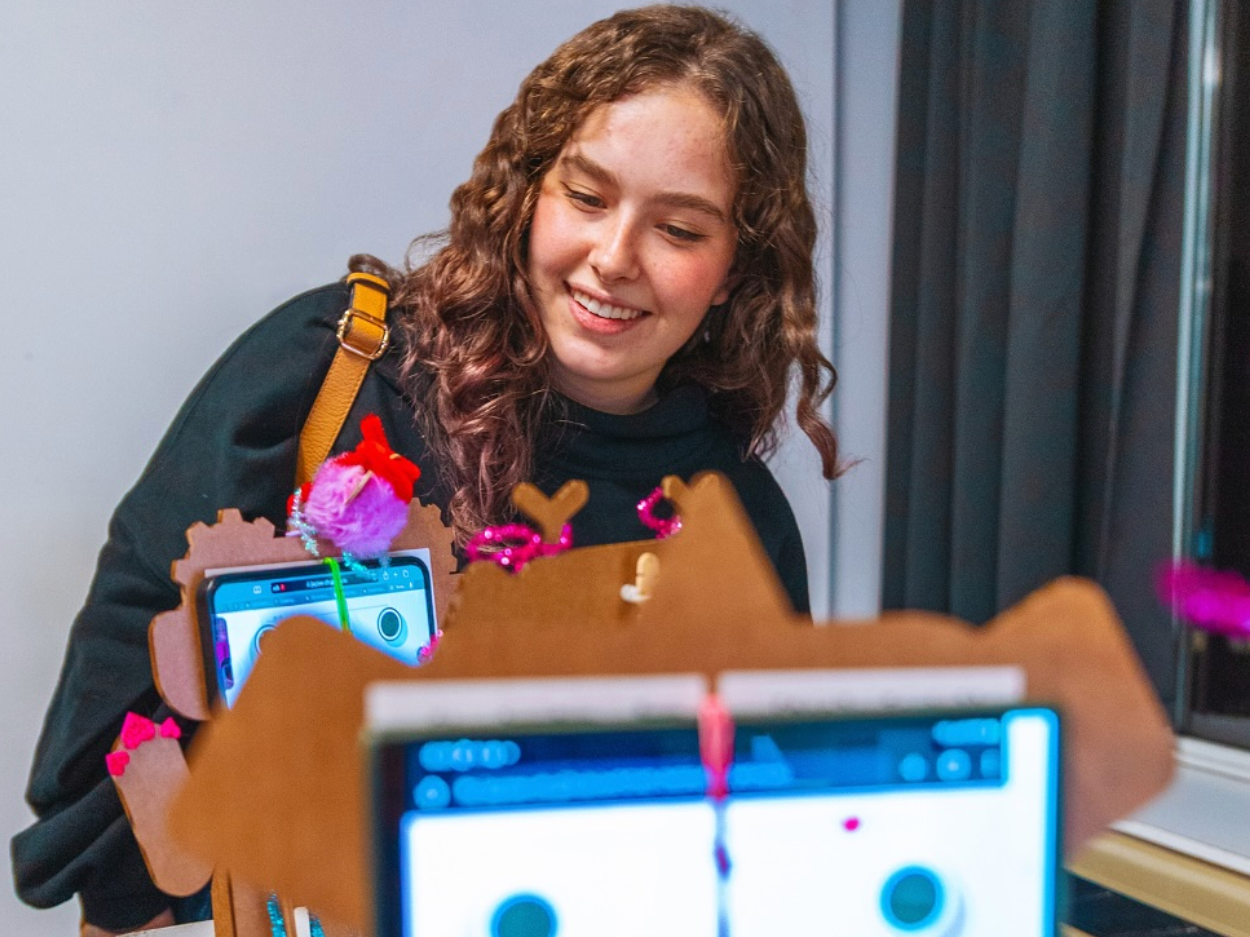
To use the Touchstones system, the Graphical User Interface (GUI) used to design vibration patterns output from the Touchstones devices. Drawing a waveform on the screen with a finger and pressing “send” shares the designed waveform with all the Touchstones as a vibration pattern. Users are also offered example patterns to get a sense of potential ways to make patterns meaningful -- for example, a "How-Are-You" pattern (three consistent pulses) was designed to translate the syllables of the phrase into a vibration pattern.
The physical Touchstones devices each have an embedded hardware system made up of a QT Py microcontroller, haptic motor driver, mini ERM vibration motor, LiPo battery, and battery charger (Adafruit’s Battery BFF). The accompanying GUI for pattern designing was made with p5.js and Node.js. Wireless communication is enabled through the use of a local network to connect all Touchstones devices, tablets hosting the GUI, and a laptop running a Node.js server.
The devices took on a stone-like form over the course of an iterative prototyping process. The shape was inspired worry stones for their ergonomic form and tactile comfortability. The 3D model was designed in Fusion, including a custom snap-fit closure, and printed in marble PLA filament.
EXHIBITIONS: